
Sustainability & Environment
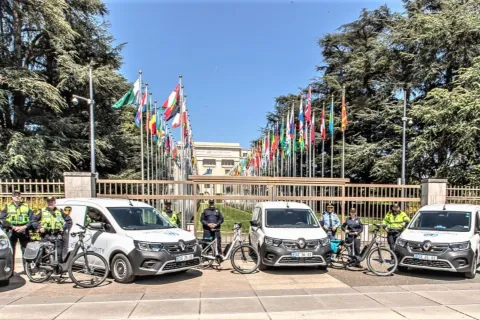
Upgrade Electric Vehicle Charging
BackgroundThe Palais has 32 electric vehicle (EV) charging points which do not allow UNOG to charge users for the electricity consumed. After a period of making charging available to users of the Palais for free, most had to be closed in 2023 as the model was not financially sustainable. Only some of them still operate for UN vehicles.
ScopeThe EV charging infrastructure would be upgraded to allow staff, delegates and visitors to conveniently recharge their electric vehicles and pay for their personal electricity consumption.
Impact
Support sustainable commuting and reduce local greenhouse gas and air pollution emissions.
Support key strategic objectives of the host country & host city (10% of vehicles to be electric, 50% to 60 % reduction in air and greenhouse gas pollution by 2030).

Estimated Cost
CHF 50000
– CHF 480000
Location
Different Parkings around the Palais des Nations
Shade Sails
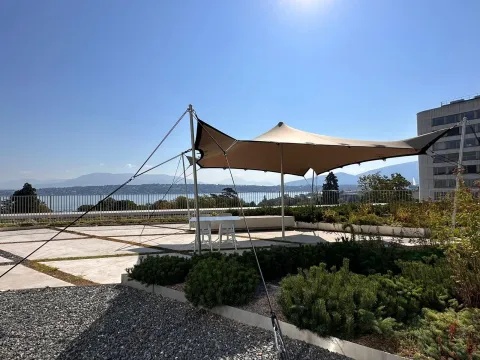
BackgroundThe terraces around the Palais des Nations, in particular at the H-Building, hold great potential as collaborative outdoor workspaces or as peaceful havens to take a break, recharge, or have a chat with colleagues. In the summer, they are exposed to intense sun and heat. With the installation of shade sails, the unused terraces could be turned into welcoming, shaded retreat areas that support wellbeing and provide space for informal exchanges.
ScopeInstall weather-resistant, eco-friendly shade sails to create a comfortable, functional space for delegates and staff, without altering the building infrastructure.
Impact
Creates a usable, restorative outdoor space for delegates and staff.
Improves wellbeing, connection, and informal exchange.
Estimated Cost
CHF 30000
– CHF 40000
Location
Terraces at the Palais des Nations
Petals for Peace
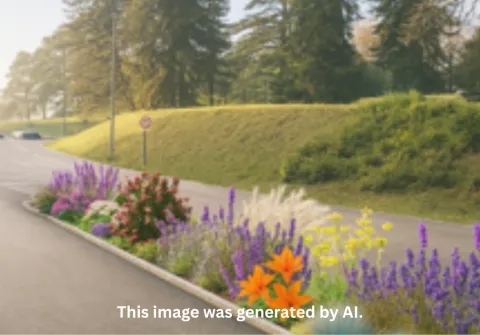
BackgroundAs visitors enter through Pregny Gate, their first impression of UNOG is shaped by what they see. The Petals for Peace project would bring new life to the outside space on the way to the conference rooms of the E-Building, using diverse flowers to reflect the diversity of people who come together - each one unique, yet united in a shared pursuit of peace and dialogue.
ScopeRevitalize an outdoor area on the premises of the Palais des Nations by creating a welcoming landscape that respects nature and reflects cultural diversity. Refreshing the area with colorful flowers, the visitors' experience is enhanced.
Impact
Flowers enhance biodiversity, helping to purify the air by absorbing carbon dioxide.
Exposure to flowers and green spaces has been shown to offer important mental health benefits
Lighting and Sensor Efficiency
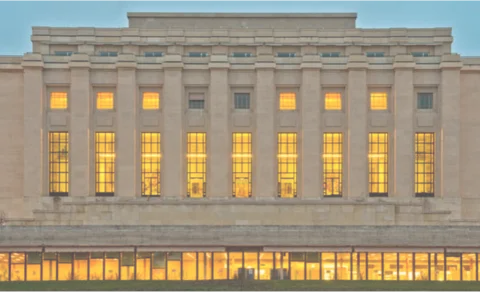
BackgroundTo ensure modern standards of functionality and sustainability, the Palais des Nations has progressively upgraded its building systems. Upgrading lighting through efficient fixtures and smart controls, in line with host-country standards, could have a significant additional positive impact on energy use.
ScopeThe objective is to further upgrade the lighting systems and build-in sensors to 1) reduce electricity consumption 2) increase sustainability by lowering its carbon footprint and 3) replace lighting systems that will soon be discontinued. The selection of lighting is guided by the specific standards of the host country.
Impact
By making lighting at the Palais more efficient, 500000 kWh/year in electricity could be saved.
With savings of 4% of the total electricity consumption, costs of CHF 150000/year could be avoided.
Estimated Cost
CHF 90000
– CHF 3722000
Location
Galerie des pas perdus, Buildings A, AB, AC, B, C, D, S1, S2, Campus
Glazing Efficiency
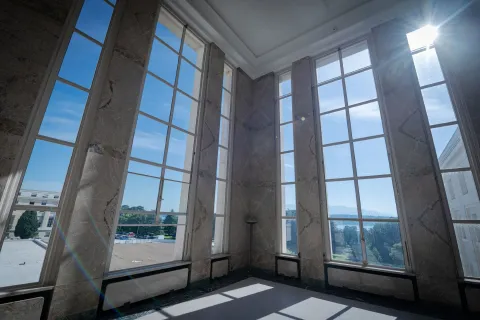
BackgroundExtensive glass surfaces at the Palais des Nations have a potentially high impact on the energy performance of the building. Ageing windows compromise insulation and increase energy demand. During earlier renovations in 2014, UNOG successfully replaced 1,070 windows, yet 620—equalling 2,241 square metres of glazing—remain in need of restoration and renewal.
ScopeUpgrading the glazing across the Palais des Nations would help boost energy efficiency and sustainability, thereby optimizing budget utilization. The installations can be flexibly divided into several sub-projects.
Impact
Its energy savings (electricity and gas) would result in a cost avoidance of approx. CHF 600'000/year.
CO₂ emissions of approx. 600 tons/year could potentially be evaded through the renewed efficiency.
Estimated Cost
CHF 25000
– CHF 14000000
Location
Galerie des Pas Perdus, Buildings A, AB, AC, B, C, D, S1, S2
Solar Panel Extension
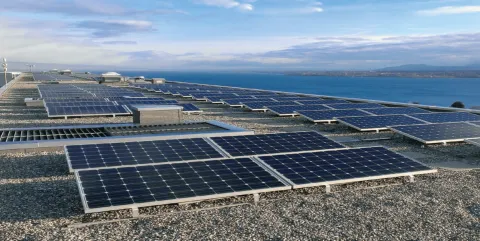
BackgroundElectricity for the Palais des Nations is sourced from external vendors at market rates and generated via photovoltaic systems. The Palais des Nations already features 3'683m² of solar panels which cover around 5% of the current electricity use.
ScopeThe objective is to install additional solar panels on various buildings across the Palais des Nations to 1) reduce dependence on market prices, thereby improving budget efficiency, and 2) increase sustainability by producing energy from UN-owned solar panels.
Impact
The extension would lead to a potential electricity production of 753000 kWh/year.
While additionally covering 5% of electricity needs, CHF 200000/year could potentially be avoided.
Estimated Cost
CHF 50000
– CHF 1185000
Location
Buildings AB, AC, B, C, S1, S2, CCO, H